skip to content

All projects: Gel, Jobs, Gootodo, Games, Uncle Mark, Goovite, Blog, Bit Literacy

Seven suggestions for messy times: notes from a talk I gave last week to several dozen heads-of-school.


New job post: Wells Fargo Bank (Senior User Researcher) — CA


Why the shiny thing is everywhere

Why do so many websites have the same shiny thing that users don't want?

Company D saw something shiny on Company C's website, so they launched the same thing.

Company C had the shiny thing because they had seen it on Company B's website, and so they copied it.

Company B had the shiny thing because they had seen it on Company A's site.

Company A did it because someone thought the shiny thing sounded cool.

But no one had ever asked a user.


Gootodo reviewed in TechRepublic

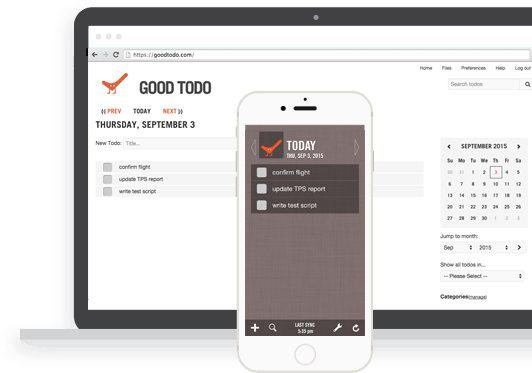
This review of Gootodo in TechRepublic nails it:

By accepting items through email, Gootodo becomes an active partner in reducing the clutter in your inbox, which allows you to really focus your email activities separately from your time management activities. This lets you feel much less overwhelmed and stressed out, as well as making sure that you are able to find the information that you need and quickly respond to emails. The idea of day-based to do lists instead of a large list with due dates makes the day's work load feel much more manageable.

Very well put.

Try it here, free for one month: Gootodo.com

P.S. Yes, the name... the name. I polled Gootodo users this week - and the consensus is that we need a new name. Working on something short, easy to remember, easy to say, and available in .com. :)


How to halve your emissions

How to cut your emissions in half - good roundup from Treehugger of Graham Hill's Gel 2009 talk (including the video of the talk):

According to Hill, by following his simple "weight loss" plan just one day a week, you can save $1000, lose 10 tons of carbon and be healthier. The tips offered are really fascinating such as how a NY-Bangkok trip generates half of your annual carbon emissions - in one trip! Yikes! So, choosing your plane and combining trips really does impact the emissions your generate. Essentially by becoming a smarter shopper, (food, flying, green power) you can at least cut your emissions in half, which is a bigger impact than just using a canvas shopping bag.

See also: Video of Graham Hill, Treehugger.com founder, at Gel 2009


Notes for building a better restaurant experience: 50 things restaurant staffers should never do


New job post: Kakai (Senior Interaction Designer (consultant or employee)) — CA

Hertz changes its logo

Hertz, the rental car company, just changed its logo.

I occasionally have fun commenting on companies that spend millions of dollars changing their logo without ever talking to customers.

But this one - if it's true - is really notable. Apparently Hertz conducted customer research - a 25- to 30-minute survey, including live-chat Q&A, according to one person - just to get feedback on the new logo. Just reactions to the graphical change. Not about what being a customer of Hertz is actually like, or why people choose Hertz (or not) over its competitors. Just the logo.

Translation: yes, they did customer research. But no, it still wasn't directed toward improving the customer experience.

What has to happen before large companies take an authentic interest in improving the customer experience? (I'm biased, but I've seen lots of companies dramatically improve their business metrics with some simple, common-sense research.)


New game: Plants vs Zombies – Plant the plants to keep zombies on your lawn. Cute fun. (Downloadable demo or buy full version for twenty bucks.)

A few fun Halloween pointers:

Chris "in a van down by the river" Farley, on Halloween

Halloween Health Scare, by Zina Saunders

Jerry Seinfeld's Halloween memories

• Now on the games list, Plants vs Zombies - a fun casual game for the season.


New job post: PennySaverUSA.com, a division of Harte-Hanks Shoppers (User Experience Designer) — CA

Reflections on the patient experience (after Gel Health)

I'm just catching my breath after running the first Gel Health conference last week in New York - a unique two-day event exploring "the patient experience."

The event was a success, and there's a lot I could say about what I learned and experienced there. But I'll just share some scattered thoughts.

We can fix healthcare.

I was struck by the number of real-world solutions we learned about. Improving the patient experience isn't something we need to wait for - it's happening RIGHT NOW, and has been for years, and we can learn from what's working:

• Dr. Bridget Duffy spoke about Code Lavender - where it came from, what it means to her, and how it works in several major hospitals. Living proof that the system can change - we can make improvements.

• Medical errors (described well by patient advocate Dan Ford) are getting better response, said Dr. Sigall Bell, and she has the data to show the advances.

• Pediatric wards all over the world are getting the gift of laughter, via Clown Care - we heard from founder Dr. Michael Christensen how subversion, risk, and improvisation played into the beginnings of the program almost 20 years ago (and continue today).

• Dr. John La Puma teaches and advocates, through ChefMD, better health through nutrition, especially where simple, healthy food can replace more expensive drugs.

• Bill Brownstein at Kids RX is running a pharmacy that listens to customers - answers the phone before the second ring - makes friendly deliveries - and still is in business. Serving the patient, it turns out, is good business.

• The cancer center at Johns Hopkins - working with Performance of a Lifetime - is changing the culture, actually making real-world improvements, to the day-to-day experience for oncology nurses (maybe the toughest job in the world), thus improving the care given to patients.

There is hope.

The theme of "hope" kept popping up throughout the event - organically - again and again. Dr. Mark Pochapin talked about why he never tells a cancer patient "you have x months to live," because there's always hope. He brought a former patient, pancreatic cancer survivor, to the stage to prove the point. She just turned 90.

Dr. Robert Martensen talked about dying with dignity - and what it means particularly for older women, who tend to outlive their husbands.

Olie Westheimer talked about a unique program that partners Parkinson's patients with a modern dance company. In the video she showed, patients who are facing this devastating disease talked about the hope and joy the program gives them.

A good first step is to acknowledge the other.

Bridget Duffy began the day by talking about how invisible she felt when she was in a wheelchair after an accident earlier this year.

Later, Dr. Javette Orgain took us through the day-to-day life of doctors in inner-city community health centers in Chicago.

Dr. Jim Withers gave a moving presentation about caring for the chronic homeless in Pittsburgh (and founding a worldwide "street medicine" movement). And the day finished with Daniel & Ken Trush, who run a music foundation for disabled people.

Attendees say it better than I do.

Several attendees have shared how they'd describe Gel Health; here are just three I thought encapsulated it well:

• "A place to be re-energized about the possibilities of what patient-centric healthcare delivery would and could look like, through real-life examples."

• "This is the only healthcare conference I know where the focus is on real people's needs and how they've been met. It doesn't lead with a technology solution."

• "A unique conference highlighting inspirational stories by thought provoking speakers who shared their ideas (and how they made them reality!) for creating positive experiences for various healthcare stakeholders."

Thanks again to everyone who was there.

For everyone else - I hope this gives some sense of the great progress quietly being made in healthcare, and what the real possibilities are for future transformatian.

For anyone who wants to vote for a "next year," I've put up a temporary discount (thru Friday) on Gel Health 2010 tickets. Click here to sign up.

I do hope to start posting videos within a few weeks on
Gel Videos - stay tuned (and meantime, watch a few!)


The employee experience at Gap vs. Apple

Comparing the employee experience at big brands:

At Gap my chief duty was to fold clothing that had been unfolded by customers ... felt like an eternity. This was also true of working at Enterprise rental car and Starbucks, where all of our movements were measured and monetized. Perceptions of time, I found, are closely linked to the employees' feeling of freedom: The more constrained the environment, the slower things moved, and the less happy employees were.

In contrast, work at the Apple Store was set up so you were focused on accomplishing goals, not filling up time.

Guess which environment has the best customer experience.


New job post: Wimba, Inc. (Sr. Product Manager) — MA

Perfectly fine tips for email management. But (like every other story on the topic) completely misses the all-important step of sending action items to a todo list like Gootodo.com.


New job post: Evri (UI Designer) — WA

New game: Hypnotic Discotheque Fascination – Clever use of color and music transform a simple concept into a fun game.

New game: Small Worlds – Elegant and beautiful exploration. (tx, waxy)

New game: Machinarium – Outstanding adventure game from the makers of Samarost 1 and 2. Must-play.

A post-email utopia?

It's the end of the email era, says the WSJ. To paraphrase: In the bad old days we were overloaded by emails coming into the inbox, but in our bright future we'll be taken care of by the tools - Facebook, Twitter, Google Wave, and others - which will do all the work for us. We'll just calmly dip into the river of information when we need it, and otherwise blissfully ignore it all.

Something tells me it's not going to go that way.

Tools are essential - and we need better tools than we have today - but it always raises a flag when I see someone announcing a new utopian era - based on yet more tools. (It's certainly an attractive proposition to the software industry - users ceding more control, and more attention, to more and more and more tools!)

The article covers more than the tools, and makes plenty of good points - worth a read. Just beware the boosterism.


Last chance for Gel Health this Thursday and Friday.

It's shaping up to be a great event. And this program, this list of speakers, is only going to run once.

Gel is hard to describe because you have to be there to "get it." Though attendees have described it this way in the past.

But if you're ready to take a chance at a different kind of conference experience, sign up here.


The first Gel Health conference is in a few days. Thanks to the good folks who are reminding the world about it: Eugene Borukhovich, The Health Care Blog, Chris Abraham, Philippa, and several others.


On complex collaboration tools

Newsweek on Google Wave:

This is why Google represents the antithesis of Apple. With Apple, it's all about simplicity. I once joked that at Apple they don't start with the product, they start with the advertisements. If they can't think up a good ad--if they can't tell you, in a few words, what this product does and why you simply must have it--they probably won't bother making the product.

Not sure I'd go so far as "antithesis," but good commentary overall on overly complex gee-whiz collaboration software.

If you can't explain what you've built, there's a problem.

See also: Google Wave doesn't stop information overload


New game: Must Eat Birds – Bizarre fun from Japan: shoot the ball to eat birds and grow cake. (Thanks, jay)

Best summation of Gödel and paradoxes I think I've ever read:

Godel proved that any consistent mathematical system that is powerful enough to prove anything interesting will include true statements that can't be proven via that system. So from the standpoint of any logic, there will be elements that must be taken "on faith"

A healthy way to think about proof systems (where "proof systems" is intended to stand in for a host of mathematic and scientific concepts as well) is that though they are imperfect in the Godel way, they are the best tool that we have for understanding the world and they get great tangible results in terms of science and technology in a way that nothing else does.


Google Wave doesn't stop information overload

Google Wave is too complex, says Farhad Manjoo at Slate:

it's not immediately clear why you should take the time to learn all this stuff. ...waves with multiple people can get just as messy as a wild e-mail threads--more than a few I took part in devolved into chaos. ... In the same way, Wave does nothing for e-mail overload. In just the few days I've had an account, I've already started getting roped into long chains of messages with people I didn't know. Were Wave to become as popular as e-mail, it would surely succumb to the same noise that now crowds our inboxes.

The solution to overload isn't primarily Google Wave or any other tool, because technology isn't the primary reason for overload. Tools are essential, but overload is primarily a behavioral problem: on the sending side people aren't writing clearly or acting with empathy for the people they email to; on the receiving side, people haven't been trained to spend five minutes a day emptying their inbox and sending action items to a todo list.

Send this man (and Google engineers) Bit Literacy! Or at least try out Gootodo - a simple tool that really does address overload.


New job post: Financial Engines (Senior Designer) — CA

Want better Web design? Watch real users:

I've long felt we're missing something with the way we go about user testing. ... I prefer to watch them in their natural environment. That would mean being in a motor home, with restless dogs and a kid playing the electronic keyboard while another one is yelling that he can't concentrate to read and watching the mom struggling to find directions somewhere in South Carolina using a cell phone with a screen smaller than a Hershey's candy bar. Understanding the true user experience, for me, means actually going out and experiencing what your site users are going through.


All Projects from Good Experience

Gel Conference
Our annual get-together in New York
Jobs Board
Post or find a job
Gootodo
The world's best todo list
Good Experience Games
The best games online
Uncle Mark Gift Guide
The guide to technology and life
Goovite
Easy event invites
Good Experience Blog & Newsletter
Mark Hurst explores good experience

"...the Elements of Style for the digital age."
- Seth Godin
Bit Literacy, the book by Mark Hurst, shows how to solve email and info overload.